

For established companies and the teams that build their software
Working software in weeks, with the team you already have.
Bring us the project that has been stuck in planning. We sit with the people who know the work, write the spec, and put a working prototype in their hands within weeks. Then we help your team carry it into production.
Start with a 30-minute call. Discovery runs 2 to 4 weeks, from $15,000, and ends in a written plan you keep.
Recent work
Dealer software
Affinitiv
Two prototypes in 4-week sprints, both adopted as production software
Channel marketing
RVLVR
Stakeholder interviews to a working prototype in 2 weeks
Polling and media
Sided
Core product rebuilt in 2 months against a 6-to-12-month plan
Sports betting
Sports Injury Central
New platform shipped for the NFL season
Healthcare
National medical device manufacturer
AI roadmap, and a team that now builds on its own
Local services
Our own local businesses
Run day to day on software we built
Planned against shipped
What the plan said, and what shipped.
Sided
Core product rebuild
6 to 12 months planned
Shipped in 2 months
RVLVR
Interviews to a working prototype
2 to 3 months, their usual path
Shipped in 2 weeks
Affinitiv
Two prototypes, both adopted as production software
Before us, a platform modernization that had run for years
Shipped in 4 weeks each
Planned figures are the estimates each team had before we started. Affinitiv's runs off the scale: its modernization had been underway for years.
Does this sound like your team?
Our clients make medical devices, sell software to car dealers, run sports media and build sheds. What they had in common was work that needed to move faster than their usual process allowed.
- A software project that has been a quarter away for over a year
- Requirements that go back and forth for months before anyone sees a screen
- A fixed date, like a launch, a season or a bid, that the current plan won't make
- A team that knows the business well but is stretched across too much
- Typing the same information into systems that don't talk to each other
- Knowing that how things really work lives in one or two people's heads
If a few of these sound familiar, that is where we would start.
How we work
01
Working software within weeks
You get something you can click through early, usually in two to four weeks. A working tool is easier to judge than a plan on a slide.
02
Spec first, then fast
We write the spec before the code, then let AI do most of the typing while an engineer reviews every change. That is how a plan measured in months turns into weeks.
03
Your team's knowledge is the raw material
The most valuable input is what your experienced people already know. We capture it in interviews and recorded working sessions, then build it into the tools they use every day.
04
Your people stay in charge
Every step we automate has a person approving it. Your team signs off on the work until the track record shows the step can run on its own.
How a prototype comes together
We start from parts that already run in production.
Most of any business application is the same: sign-in, accounts, approvals, task lists, messages, reports. We keep a library of those parts, built and run in our own software. A prototype is mostly assembly plus the part that is specific to your business, which is where the weeks go. Because the parts are real, the prototype can carry on into production.
Prototype
8 parts from the library
- Sign-in and accounts
- Teams and permissions
- Approvals
- Task boards
- Messages and email
- Reports
- APIs and webhooks
- Usage limits
- Built for youYour workflow
A typical four-week sprint
Week 1
Interviews with the people who know the work. The spec gets written.
Week 2
The building blocks wired together, and a first clickable version in real code.
Week 3
Your part of the workflow built in. Real data in, feedback from the team.
Week 4
A working prototype in your team's hands, and a plan for production.
How an engagement runs
We can build it for you, teach your team to build it, or review their work while they build it. Every engagement starts with discovery.
Step 1
Discovery and plan
From $15,000
2 to 4 weeks
We interview your leadership and the people doing the work, map how the work moves, and review the software you already run. You get a written plan: what to build, what to buy, what to leave alone, what each costs, and the first project scoped.
Step 2
Build
From $50,000
In 2- to 4-week sprints
We build alongside your team in sprints of two to four weeks, with working software at the end of each. The spec is written before the code, approval steps are built in, and your people are trained to run it before we hand it over.
Step 3
Support
Monthly
Month to month
We stay on to look after what we built, meet with you every week or two, and add engineering help when you need it.
Work
Four client engagements, and two businesses Adam runs day to day.
Automotive · Dealer software
Affinitiv
Two prototypes built in four-week sprints. Both were adopted as production software.
4 weeks
per prototype, both adopted as production software
MarTech · Channel
RVLVR
Stakeholder interviews to a working prototype in two weeks.
2 weeks
interviews to a working prototype
Media · Operated
Sided
A six-to-twelve-month rebuild shipped in two months.
2 months
against a six-to-twelve-month plan
Sports · Betting
Sports Injury Central
Parallel workstreams shipped against the start of the NFL season.
Healthcare · Fortune 1000
National medical device manufacturer
An AI roadmap, and an engineering team that now builds production AI on its own.
6 months
roadmap to a team building on its own
Local services · Operated
ShedBuilder.ai and the local services portfolio
Software built by the people who use it every day.
Who you work with
Adam Viccaro and Brad Risse lead every engagement. Trevor Sweet leads design.

Adam Viccaro
Partner, product and operations
Adam leads product on CAIO engagements, from the first interview to the prototype a team can use. He was product lead for RVLVR and Affinitiv, rebuilt Sided's core product in two months against a six-to-twelve-month plan as its co-founder, and runs two local businesses on ShedBuilder.ai, the software he built for them.
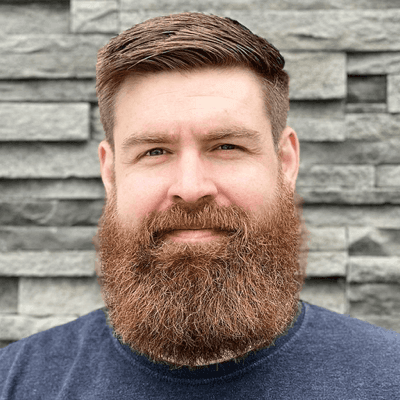
Brad Risse
Partner, engineering
Fifteen years shipping production software. Builds the agent harness and engineering workflows we deploy inside client companies, and trains engineering teams to ship with AI agents in production.

Trevor Sweet
Senior designer, design
Systems-first product designer. He turns complicated workflows into interfaces that feel obvious, and designed the interfaces for CAIO's own tooling.
Questions we hear before the first call
What happens first?
Discovery, which takes two to four weeks and starts at $15,000. We interview your leadership and the people doing the work, map how the work moves today, and review the software you already run. You get a written plan that says what to build, what to buy, and what to leave alone, with costs, and the first project scoped.
How do you move that fast?
We write the spec before any code, and AI does most of the typing while an engineer reviews every change. Short feedback loops with the people who know the work do the rest. On Sided, that turned a six-to-twelve-month plan into two months.
Is the goal to replace people on our team?
We build software that takes repetitive work off the people you have. Every automated step has someone on your team approving it until its track record says it can run alone. What your people do with the hours they get back is your call.
Do we have to replace the software we already run?
Not necessarily. We start from the systems you use today and connect to them where we can. When something should be replaced, the plan says so and puts a cost on it.
We don't have engineers. Can we still do this?
Yes. We can build it, run it, and support it for you. If you do have engineers, we can teach them to build it, or review their work while they do.
How long until we see something working?
Usually within two to four weeks. For RVLVR, stakeholder interviews to a working prototype in real code took two weeks. For Affinitiv, we built two prototypes in four-week sprints, and both were adopted as production software.
What does it cost to run once it's built?
We use plain software wherever it does the job and call AI models only for the steps that need judgment, which keeps usage fees low. The plan covers what it will cost to run each month as well as what it costs to build.
What if discovery says we shouldn't build anything?
Then the plan says so, and it's yours to keep. Sometimes the answer is a tool you can buy off the shelf, or a change to how the work gets handed off.
Bring us the project that keeps slipping.
Thirty minutes with Adam. Tell us where it stands today, and we'll tell you what a first sprint could put in your team's hands.
Prefer email? hello@getcaio.com